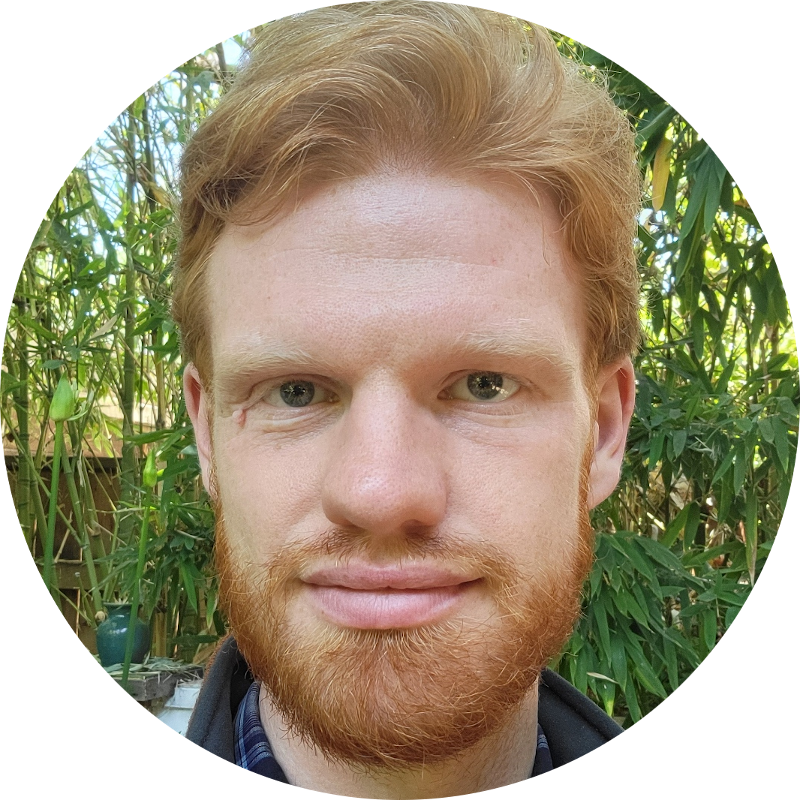
Meet the founder
From Opera to Fluent Danish
If you have ever tried to learn Danish as an expat, you know the exact moment the plateau hits.
You spend months studying grammar. You pass your Module 4 or Module 5 exams. You can read a professional contract or scan a news article with ease. But the moment you open your mouth to order a coffee or introduce yourself at a dinner party, the local person blinks, smiles politely, and instantly switches to perfect English.
My name is Ian McPherson, and I built NuanceLab because I hit that exact same wall — and used my background as an opera singer to break through it.
The secret weapon
Vocal Mechanics & Diction
Before I moved to Denmark in 2023, I got my Bachelor's degree in opera singing. In classical music, you don't just sing lyrics; you study phonetic diction. You learn exactly where your tongue needs to touch the roof of your mouth, how tightly your lips must form a pucker to anchor a specific vowel, and how to control airflow to project clearly in languages that aren't your native tongue.
Danish is the ninth language I have studied for more than six months. I know how the human brain processes language acquisition. But when I arrived in Copenhagen, I quickly realized that Danish is uniquely brutal. It is a language of swallowed endings, the elusive stød, and the famous “soft d” (blødt d) — sounds that don't exist in English and require entirely different physical throat and mouth movements.
Standard language apps couldn't help me. They focus on vocabulary and grammar, treating pronunciation like an afterthought. They tell you that you said something wrong, but they can't tell you how to physically correct it.
So, I treated Danish like an operatic score. I mapped the mechanics of the mouth, practiced the exact muscular positions required to hit native-level cadence, and managed to reach C1 fluency in under two years. Today, I listen to Danish audiobooks for fun, watch Danish cinema without subtitles, and participate fully in Danish civil society and volunteer organizations with 99% comprehension.
<2
years
From landing in Copenhagen with zero Danish to C1 fluency — by applying the same phonetic feedback loop used to train opera voices in German, Italian, and French.
The mission
Why NuanceLab Exists
I built NuanceLab to automate the exact feedback loop I used to train my own voice.
Advanced fluency isn't about memorizing more nouns. It is about fine-tuning the muscle memory of your vocal tract. NuanceLab combines state-of-the-art AI audio grading with the granular, physical feedback of a real diction coach. When you make a mistake in our labs, the app doesn't just give you a red light — it tells you to “shape your lips into a tight oo pucker,” giving you the anatomical keys to unlock a native accent.
You don't need another generic textbook. You need a dedicated space to practice the nuances that make a person say, “...Wait, are you Danish?”
Welcome to the lab. Let's get to work.